L'Iran exerce une activité minière dans le cuivre, le zinc, le minerai de fer et les minéraux industriels. Évaluez chaque licence et gisement en utilisant les preuves géologiques actuelles, les ressources examinées de manière indépendante, l'accès aux infrastructures et les obligations environnementales.
Le cuivre, le zinc, le minerai de fer et la pierre décorative dominent la production. L'application de techniques d'exploration modernes à des terrains historiquement cartographiés mais insuffisamment forés est là où se situe l'asymétrie de valeur.
L'échelle des concessions
Les droits évoluent en trois étapes : un permis d'exploration sur un bloc défini, un certificat de découverte une fois qu'une ressource est démontrée, puis un permis d'exploitation lié à un plan minier approuvé. Chaque étape comporte des conditions d'échéance et d'engagement de travaux.
La plupart des litiges rencontrés par les investisseurs étrangers proviennent de permis hérités avec des engagements de travaux expirés ou des chevauchements de droits de surface non résolus ; la diligence sur les titres précède donc le travail d'évaluation.
Où se concentre l'opportunité
La ceinture magmatique d'Urumieh-Dokhtar abrite les systèmes porphyriques de cuivre ; le Zagros et le centre de l'Iran abritent le zinc-plomb et les minéraux industriels. La capacité de traitement, et non le minerai, constitue le goulot d'étranglement national — le concentré quitte fréquemment le pays non raffiné.
L'investissement en aval dans les concentrateurs, les fonderies et les métaux à valeur ajoutée concurrence donc favorablement l'exploration greenfield sur des bases ajustées au risque.
Contraintes pratiques
La disponibilité de l'eau régit la conception des projets dans la plupart des districts miniers iraniens, et le traitement à sec ou en circuit fermé est souvent une condition d'autorisation plutôt qu'une option d'efficacité.
L'alimentation électrique, l'accès ferroviaire à Bandar Abbas et les canaux d'importation d'équipements sont les trois autres éléments qui déterminent si une ressource devient une mine.
Matière première par matière première
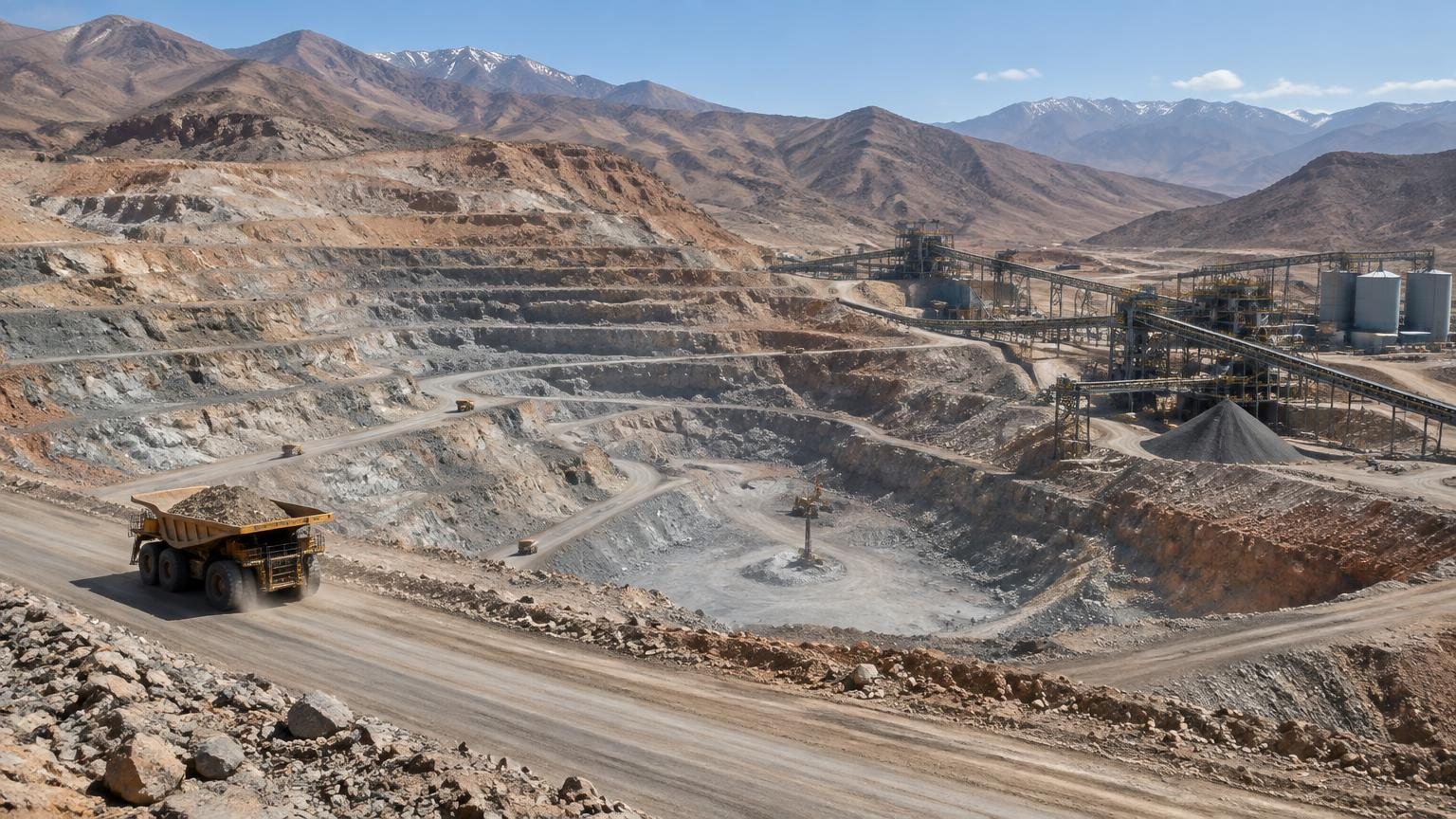
Le cuivre est le produit phare : les systèmes porphyriques de Sarcheshmeh, Sungun et Miduk ancrent un flux national de concentré qui dépasse la capacité de fusion nationale. Le zinc est concentré à Mehdiabad et Angouran, l'un des plus grands ensembles de réserves de zinc-plomb au monde, le mélange sulfure-oxyde étant la question métallurgique clé.
Le minerai de fer alimente une industrie d'acier brut d'environ trente millions de tonnes par an, de sorte que les projets de boulettes et de concentré bénéficient d'un débouché national garanti. Le chromite, la pierre décorative, la silice, le feldspath et la célestine constituent un vaste segment fragmenté de minéraux industriels où de petits opérateurs étrangers peuvent entrer avec un capital modeste.
Distinguer le potentiel géologique d'un dossier d'investissement
Confirmer le détenteur du permis, les limites cadastrales, les travaux autorisés et les obligations restantes. Les résultats d'exploration, les ressources et les réserves économiquement récupérables sont des classifications distinctes.
Un examen géologique indépendant doit être associé à des tests de récupération, à la logistique, à l'accès à l'eau et à l'électricité, aux redevances et aux coûts de fermeture. Consigner les hypothèses et les incertitudes plutôt que de projeter directement un chiffre de ressource en revenus.
Comment un investisseur étranger obtient-il un permis minier en Iran ?
Par le système en trois étapes : permis d'exploration, certificat de découverte, puis permis d'exploitation. Les investisseurs étrangers acquièrent généralement un permis existant par le biais d'une coentreprise et vérifient la conformité des engagements de travaux lors de la diligence.